Becoming Intergenerational: Why All Ages Matter to the Church
Wilson McCoy at the Restoration Collective conference in November 2025
drwilsonmccoy.com
Problem: A Modern & An Ancient Story
First is a modern story about a guy named Tony Piloseno. A few years ago, he was a young college student in Ohio and decided to get a part-time job at a major paint retailer.
He loved the job so much that he started a TikTok account that showed off all of the colors of the retailer. By the sixth video, he hit a million views on TikTok. Who knew paint went viral?
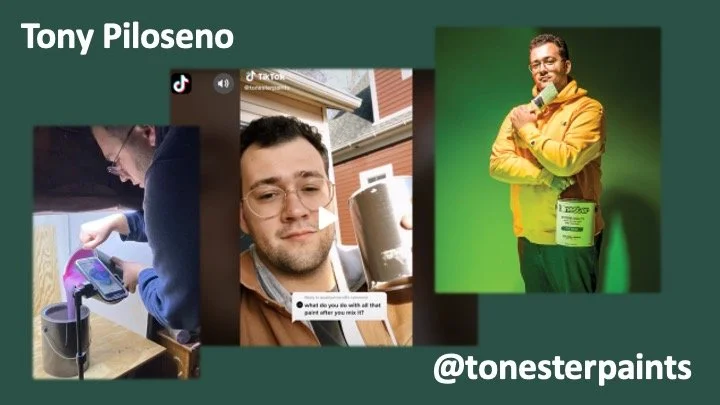
These events caused Tony to see an idea and a new way to market the company. He pitched the idea, but his older bosses were not interested. In fact, they resisted and ultimately fired him. Since his videos had already gone viral, his firing went viral as well. Companies all over the country began to offer him jobs because Tony was really good at mixing colors.
A company in Florida eventually hired him and discovered why Tony was so good.
It turns out that Tony has a condition called synesthesia (si-nuh-stee-zuh), which is a condition where a person will experience one of their senses and it will trigger another sense. For example, a person might hear something and it creates a taste. For Tony, sounds created a sight in his eyes. When Tony would hear certain sounds, he would see certain colors. In fact, that was what made his videos so popular: they were not just showing colors he saw but the sounds that caused them.
Tony now has his own paint line through this company and he is still viral online. Why? The new company was willing to see what Tony saw & the way in which he saw.
The second is an ancient story that comes from the book of Ezra. This book reports the return of exiles from Babylonian captivity to Jerusalem where they get to rebuild the temple.
The temple was destroyed in 586 when Nebuchadnezzar took the people of God into exile. However, about fifty years later, they were allowed to return to Jerusalem to rebuild the temple. Some of those returning exiles were alive when the first temple was destroyed, others were not.
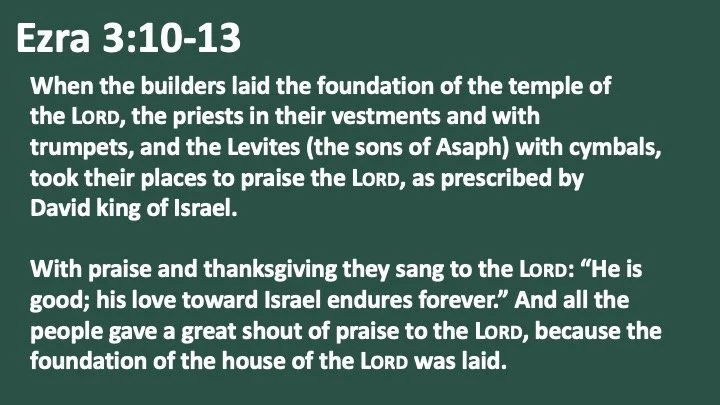
In Ezra 3, they begin to build and they finally lay the foundations of the new temple.
When the builders laid the foundation of the temple of the Lord, the priests in their vestments and with trumpets, and the Levites (the sons of Asaph) with cymbals, took their places to praise the Lord, as prescribed by David king of Israel. With praise and thanksgiving they sang to the Lord: “He is good; his love toward Israel endures forever.” And all the people gave a great shout of praise to the Lord, because the foundation of the house of the Lord was laid. But many of the older priests and Levites and family heads, who had seen the former temple, wept aloud when they saw the foundation of this temple being laid, while many others shouted for joy. No one could distinguish the sound of the shouts of joy from the sound of weeping, because the people made so much noise. And the sound was heard far away.
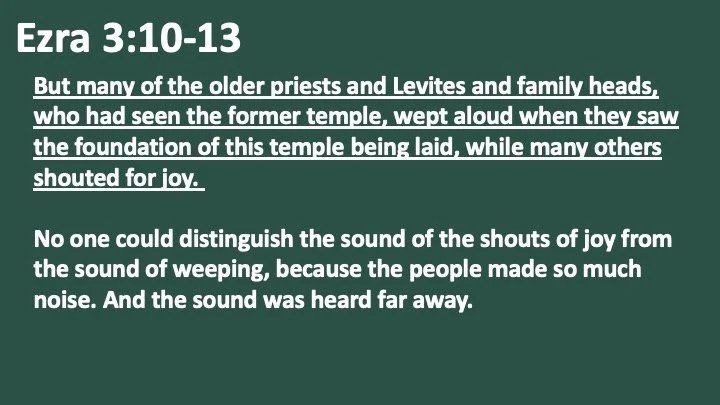
The people of God are together in this shared moment of worship and react differently. Some of joyous, but the older ones are weeping. Why? Because they had seen some things. These older exiles had seen some things the younger ones had not and it impacted their response.
These two stories reveal a problem in many churches. Churches struggle with generational divides because these different age groups see the world differently and we often fail to make space to see as another generation sees.
How Some Handle This Problem
When churches face generational struggles, they have a tendency of not always handling it in the healthiest of ways.
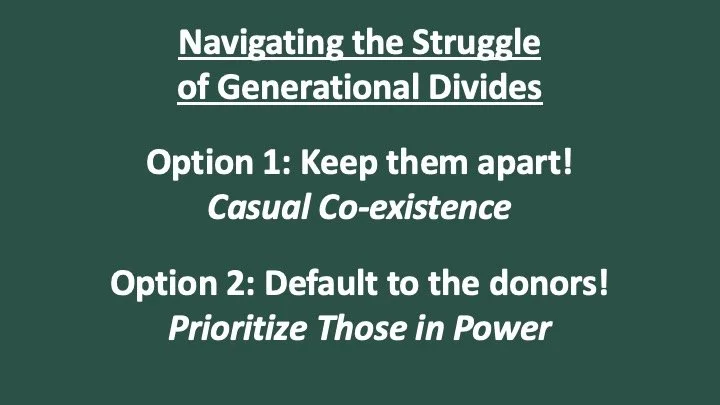
Option 1: Keep them apart! Casual Co-existence. Age-segregation is typical in churches and it is good for different age groups to be together on a regular basis in the life of a church (developmentally). But if this is all a church does, then you end up creating a variety of subcultures within a church—and one could ask the question: Is that really being the church? This is just a way to bury our head in the sand when there is a problem.
Option 2: Default to the donors! Prioritize Those in Power. This is the follow the money approach. We end up making decisions in the church based on who gives. And that is most often to the older members in the church because of their financial stability. There is a relationship between money and power in our churches and decisions can grow out of that. (Recently with a church: I want a list of who is over 50...because they give the most).
And we wonder why younger generations are often seen to be leaving the church?
Possible (Better) Way Forward (Constructive)
I am sympathetic to these realities of church life and why some want to handle them in this way. But they actually do not move our churches in healthy or holy directions ultimately. My proposal is simple and it is not a silver bullet, but I think it is a better way forward....
Option 3: Bring Them Together! Become an Intergenerational Community
Intergenerational ministry is about bringing together different generations in mutual and meaningful ways. Mutual means there is real give and take, real reciprocity, real exchange. Meaningful is harder to pin down, but that is on purpose—is there something deeper happening?
An image I find helpful: The difference between rows and circles. The row approach is typical. We sit on the same pew or row of chairs and we face the front. We are in the same space, but we are not actually engaging each other. This is what I call the multigenerational approach.
The intergenerational move is when we take those pews and rows and we turn them towards each other. We intentionally find ways to help different age groups interact with each other, get to know each other, and....to see each other and see as the other sees.
This is not a silver bullet, but I do think this changes communities of faith in faithful and formative ways. In fact, I would say that there are unique formative benefits to the church who decide to incorporate intergenerational rhythms in the life of their church. It can be challenging, it can be messy, but it is ultimately an amazing and formative way to be the church.
Disciples Retreat
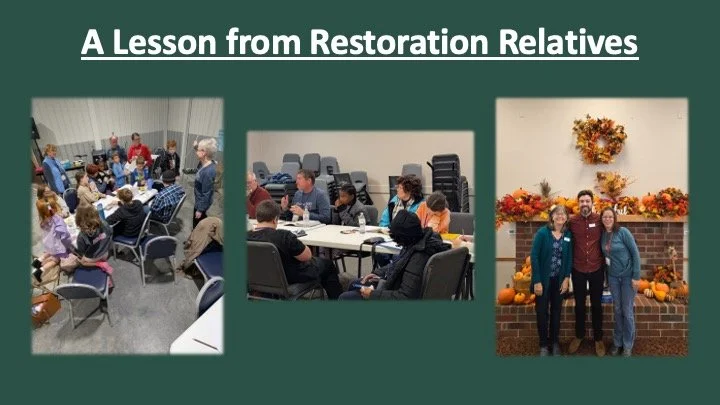
There are several examples I could illustrate, but let me give a fresh story that touched me. Last weekend I was in Ohio with a group of leaders from Kentucky & Ohio. The purpose of the retreat was that each church was going to remodel their space with money given by a grant. Two days were for the church leaders, then the second two days were for kids to join! 50 adults and 40 kids dreaming about how they might design worship space for all ages to be included.
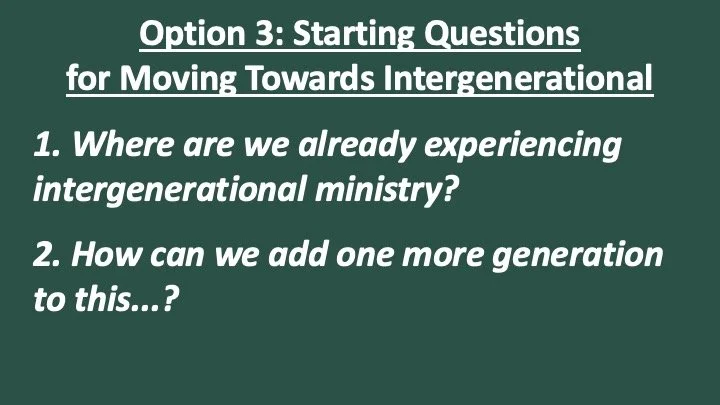
Starting Questions for Moving Towards Intergenerational Ministry
1. Where are we already experiencing intergenerational ministry in our community?
2. How can I add one more generation to this?
Two Resources: Generations Guide & Imagining All Generations